Ulughbek Madrassa

Short Historical Overview
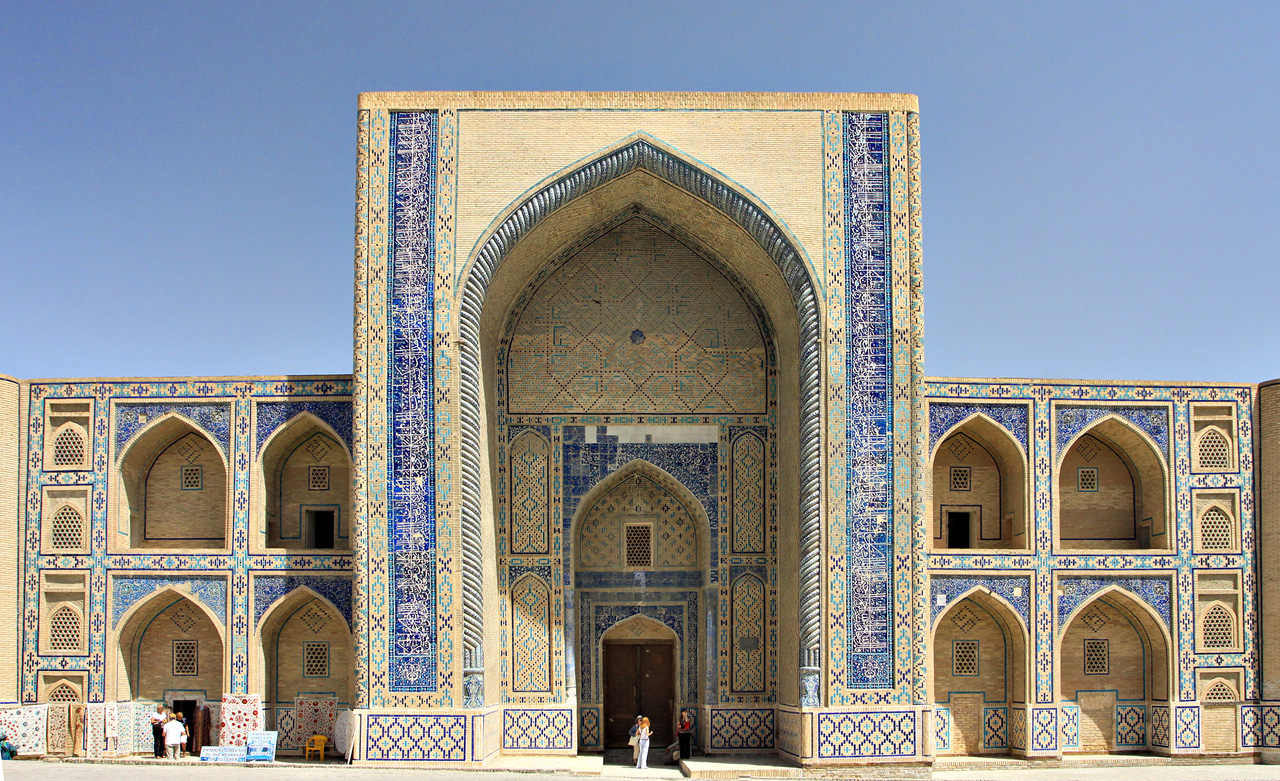
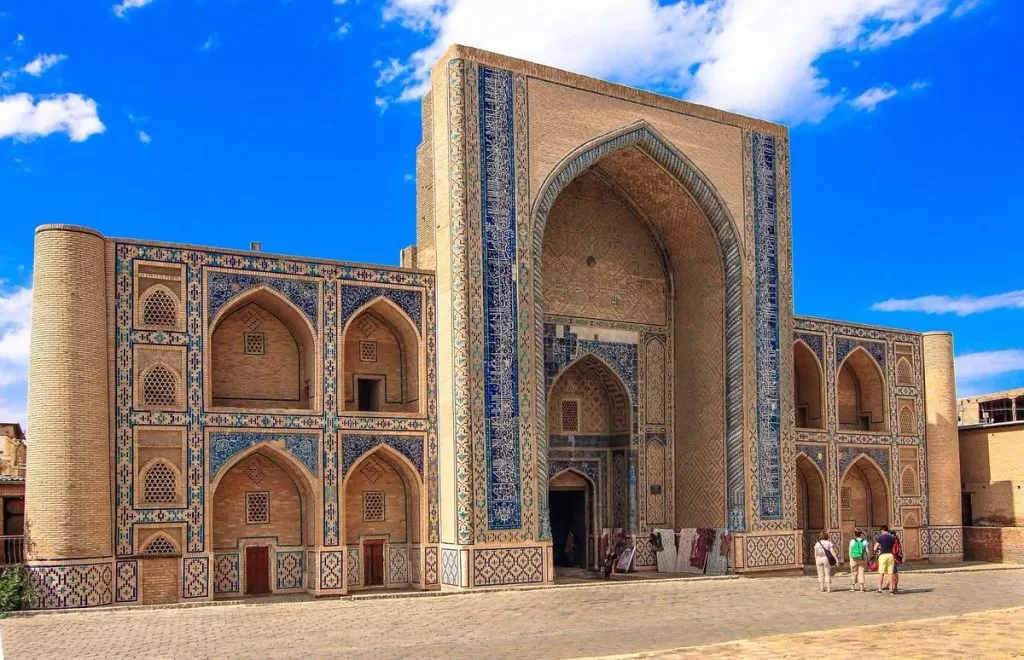
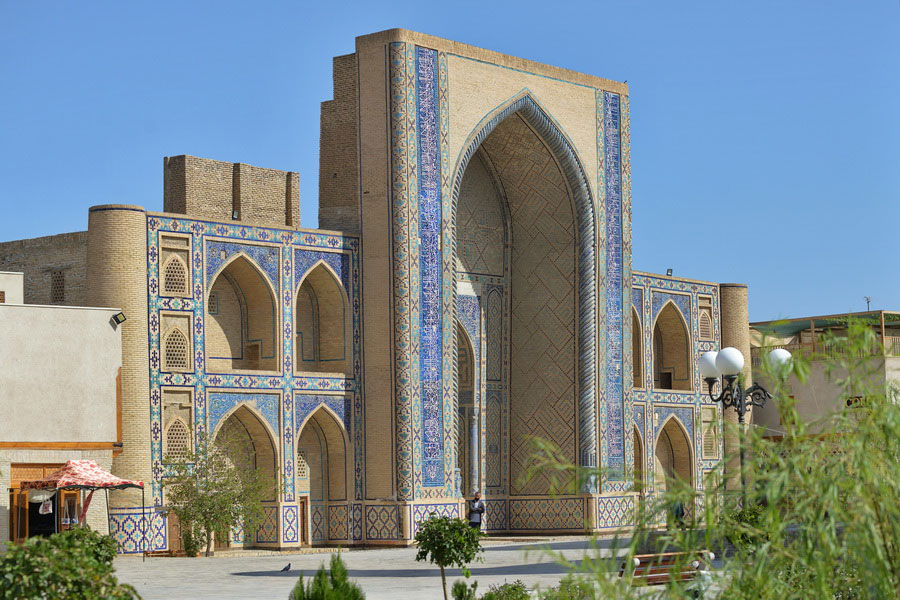
The Ulughbek Madrasah in Bukhara was built in 1417 by Ulughbek, the famous Timurid ruler, astronomer, and scholar. It is one of the oldest madrasahs in Central Asia and part of a trio he commissioned (others are in Samarkand and Gijduvan). Ulughbek aimed to create places where science and religion could exist together. Many believe this very building once echoed with lessons in math, astronomy, and philosophy. While most rulers built to show power, Ulughbek built to share knowledge. His Bukhara madrasah helped make the city not only a religious center, but a hub for learning and critical thinking.
Structural Insights
The madrasah has a symmetrical layout with a large central courtyard, surrounded by student rooms (hujras), a lecture hall, and a mosque. The entrance is marked by a tall archway (iwan), covered with glazed tile mosaics featuring stars, geometric shapes, and Kufic script—a reflection of Ulughbek’s passion for astronomy and order. The structure is made mostly of baked brick, with thick walls that help control temperature inside. The design is clean and balanced, combining strength with elegance. Though simpler than later madrasahs, it carries a special sense of purpose—built not just to impress, but to inspire minds.
Fun Fact
Bukhara was facing a severe drought, and the Bolo-Hauz complex was built with the intention of providing a water source for the people, making it a place for people to perform ablutions before prayer. The reservoir, or "Khauz," was meant to be a practical solution to the water shortage. The combination of the water and the mosque was seen as a way to bring blessings to the city.