Nadir Divan Begi Madrasah

Short Historical Overview
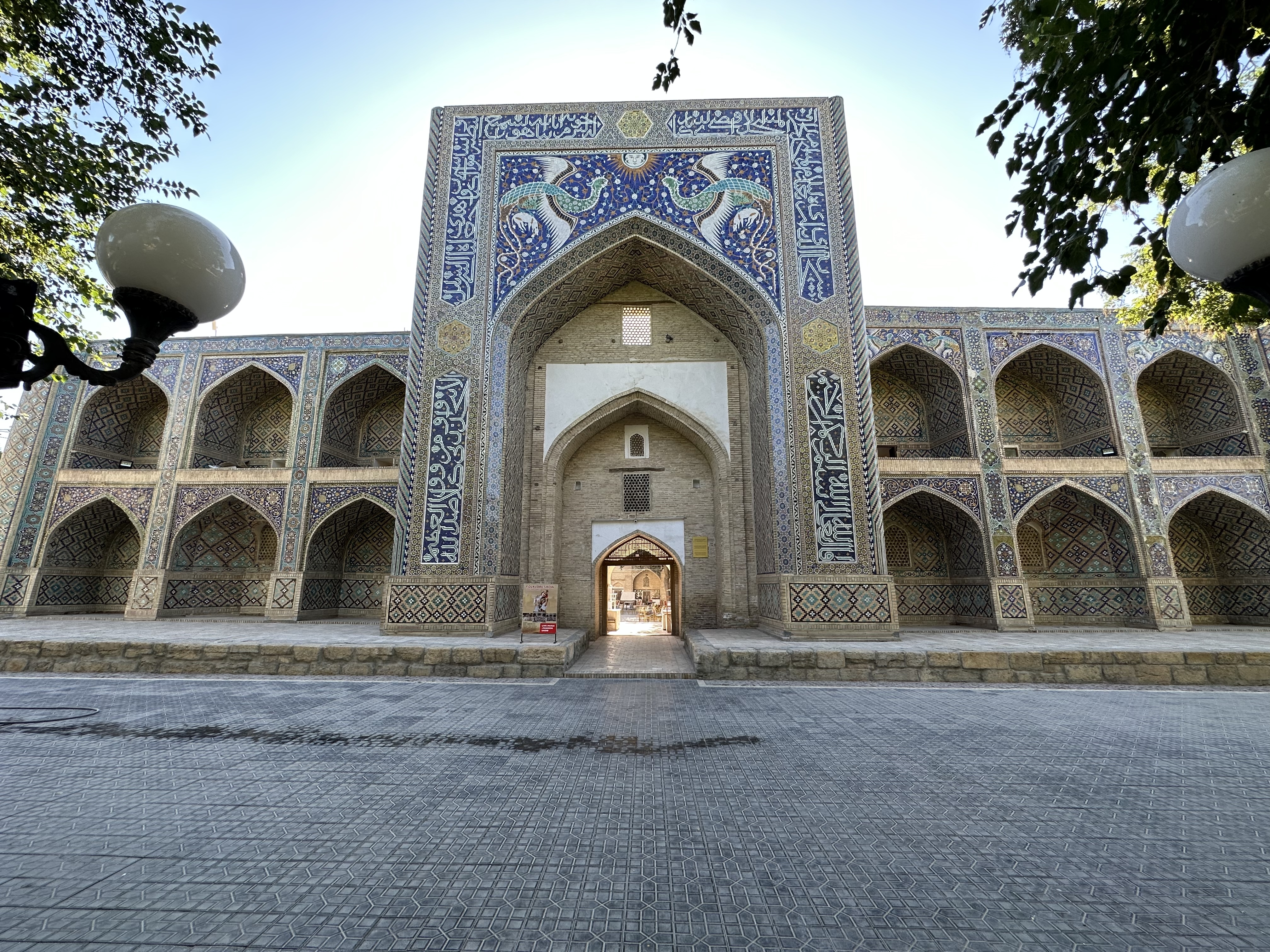
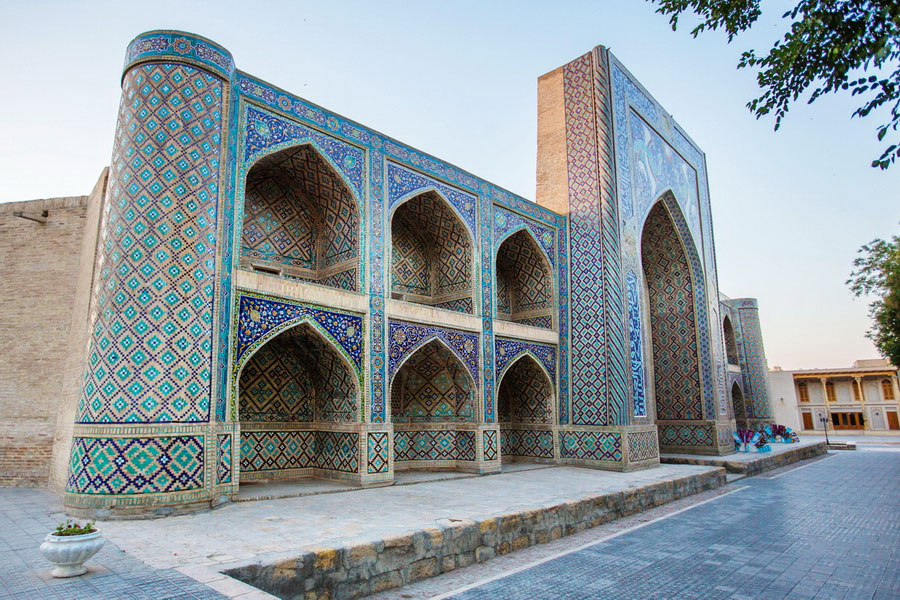
Commissioned in the 1920s by Nadir Divan-Begi, prime minister of Bukhara of that time, Nadir Divan-Begi madrasah was originally constructed as a caravanserai — an edifice for travelers and merchants to rest. Later, being worshiped for its marvelous appearance, the buildings were slightly altered to serve educational purposes. Today, the building is not just a madrasah that used to satisfy the needs of people of the past but a relic and a representation of ambitions of 17th century Bukhara.
Structural Insights
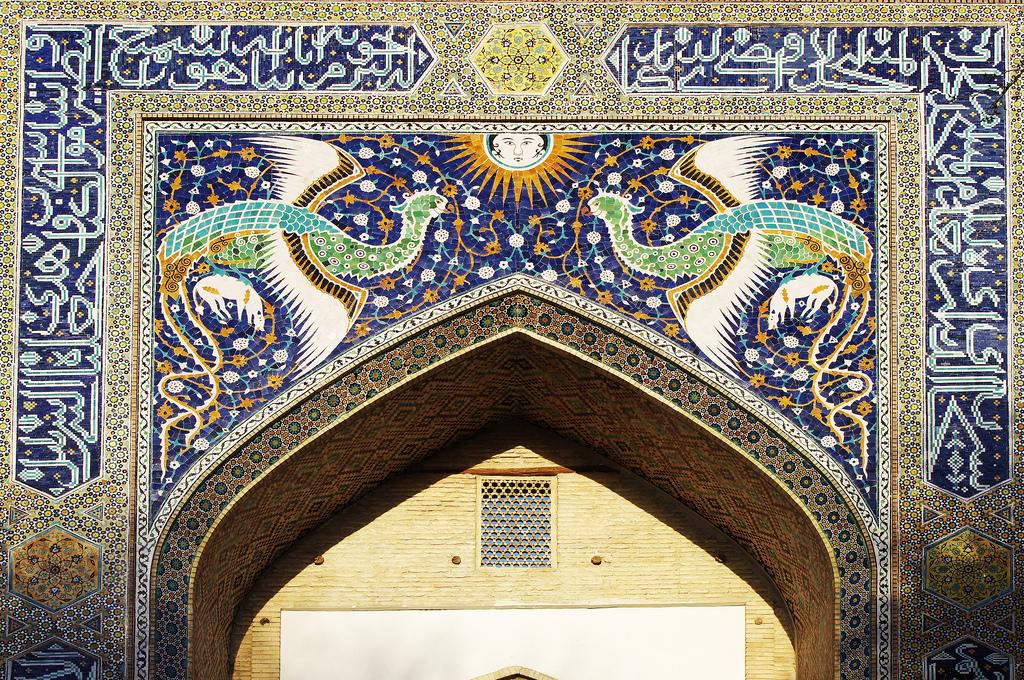
Though made of baked bricks as it is common for medieval oriental buildings in the region, the madrasah is more improvised than other edifices of that time. To be more specific, the courtyard seems to be wider and welcoming and student private cells welcoming compared to other madrasas — the result of a shift in purpose of the building. Another astonishing feature of the Nadir Divan-Begi madrasah is the entrance’s arch that is ornamented by an image of a line chasing a deer, quite an unusual art form for an Islamic edifice.
Fun Fact
“This is a marvelous madrasah” claimed Quli Khan after seeing the grand entrance to the building. Scared of upsetting the ruler, Nadir Divan-Begi repurposed the building in one single night, adding prayers and slightly changing the layout.