Miri-Arab Madrassa

Short Historical Overview
Miri-Arab (the property of Arabs) was built in the 16th century, with the date of its construction still being debated topic among archeologists. From the year of its foundation until the 1920 civil war invasion, the building was considered the largest educational and spiritual centre in Central Asia, serving as Islamic school. Sheikh Abdullah Yamani, the constructor of the building, wished to be buried in the madrassa.
Structural Insights
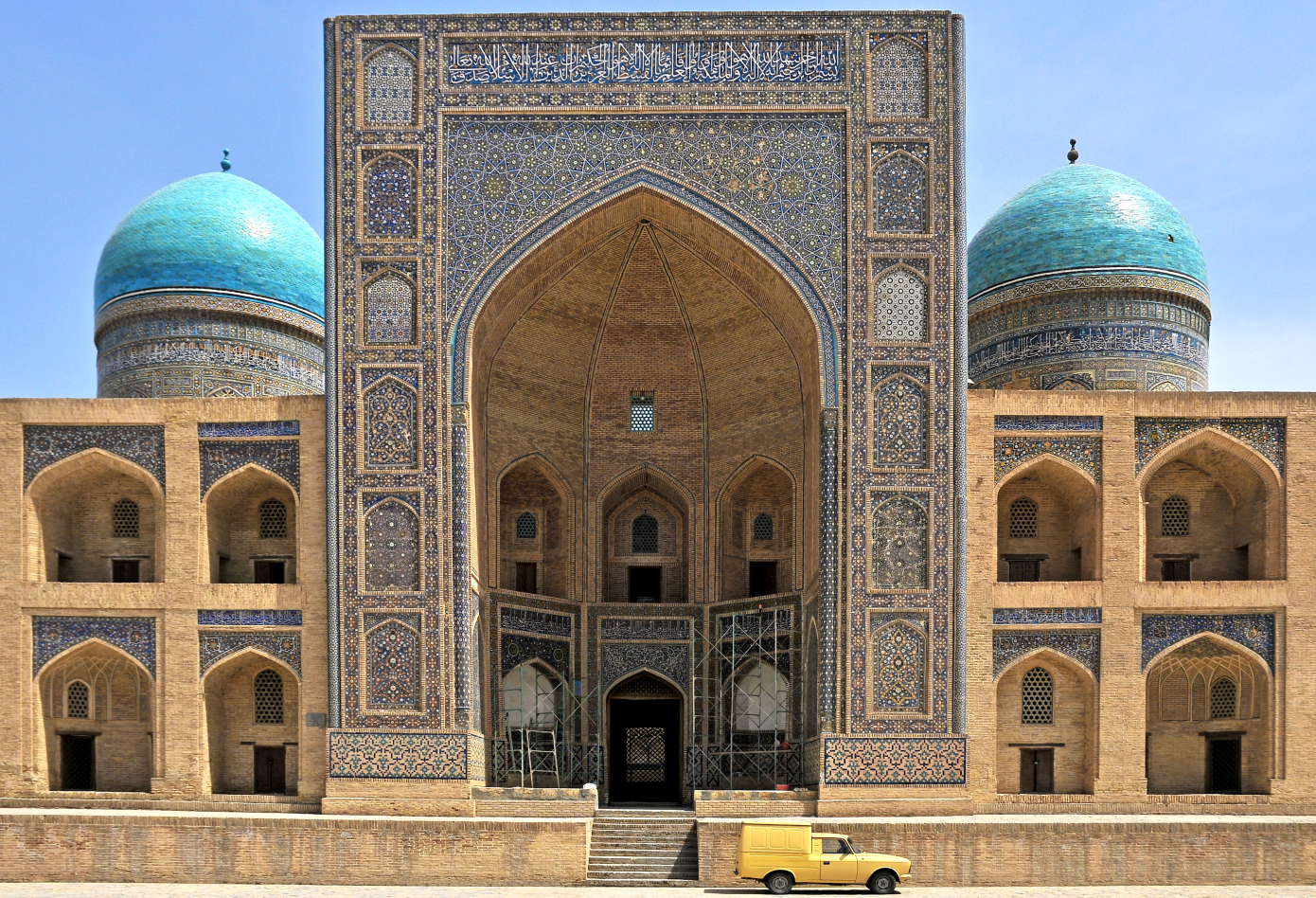
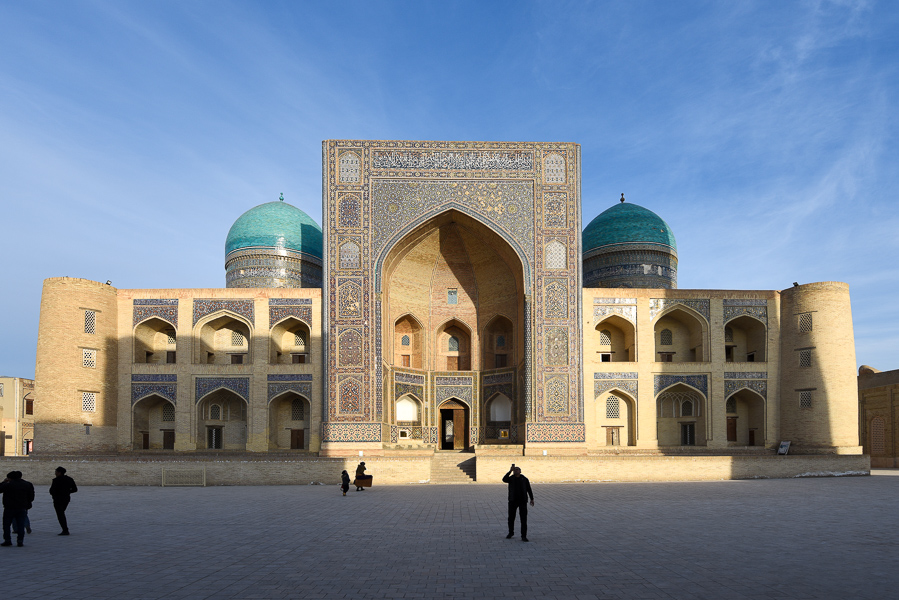
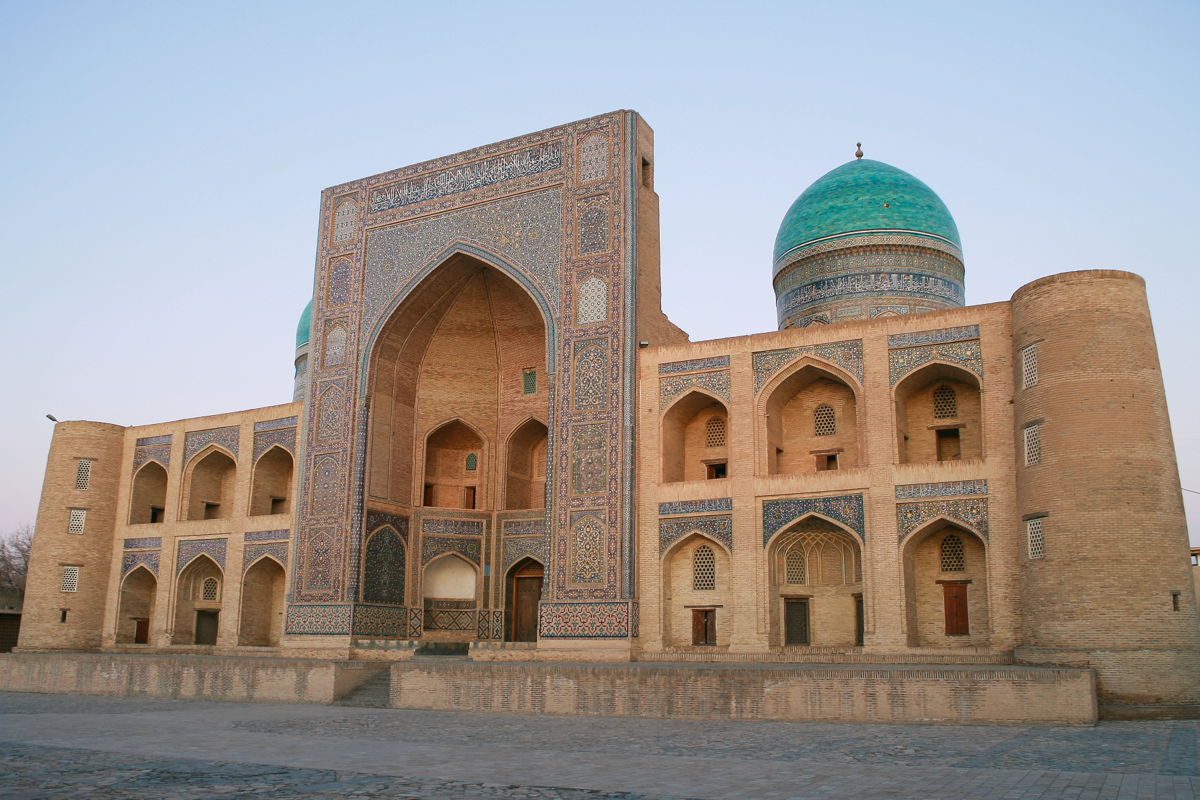
The madrassa is mainly made of baked bricks and some timber elements in the doors and ceiling. Masonry walls are 1.5 metre thick, providing solid lateral bearing capacity. When viewed from above, two big glazed sky-blue domes can be noticed from both sides of the entrance. Gaining popularity in times of Timurids, Oriental glazed mosaic was used to decorate both courtyard and iwan (grand rectangular entrance with an arch opening) facades.
Legends
The final construction of the madrasa was founded by Ubaydulla khan for the money that he received after trading 3000 Iranian prisoners.