Magok‑i‑Attari Mosque

Short Historical Overview
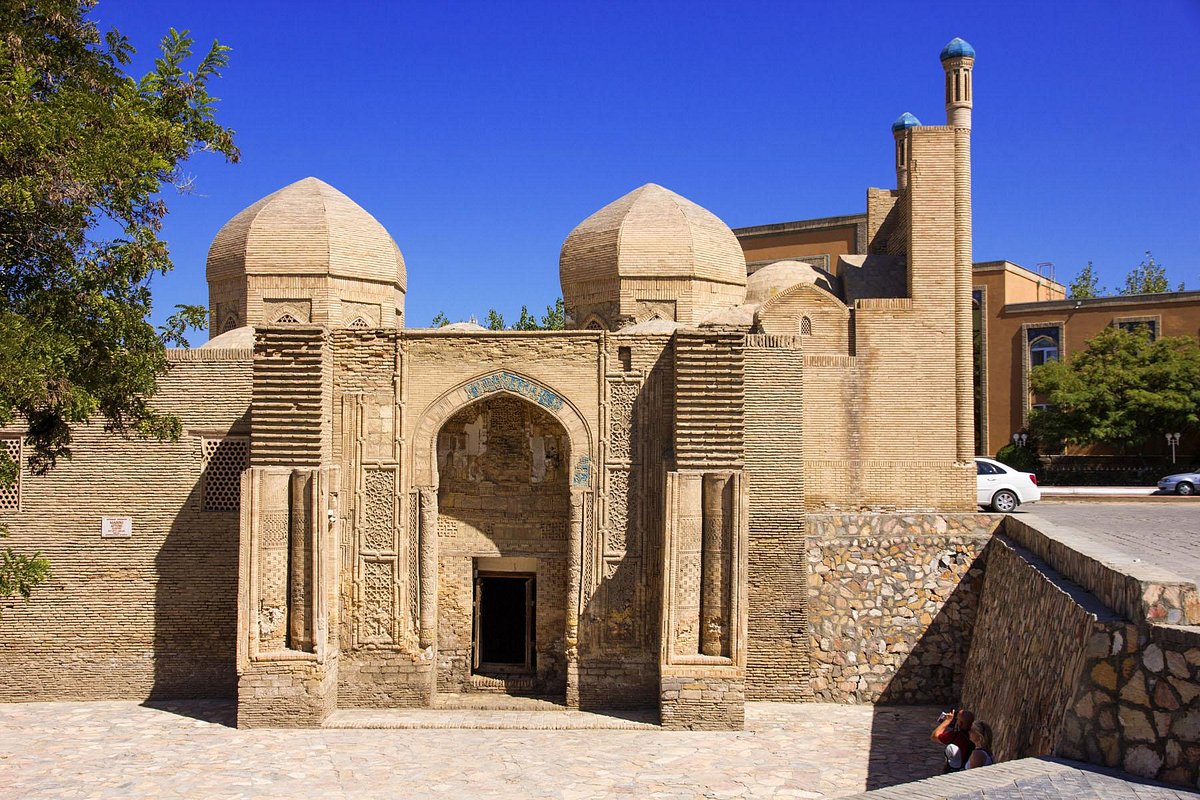
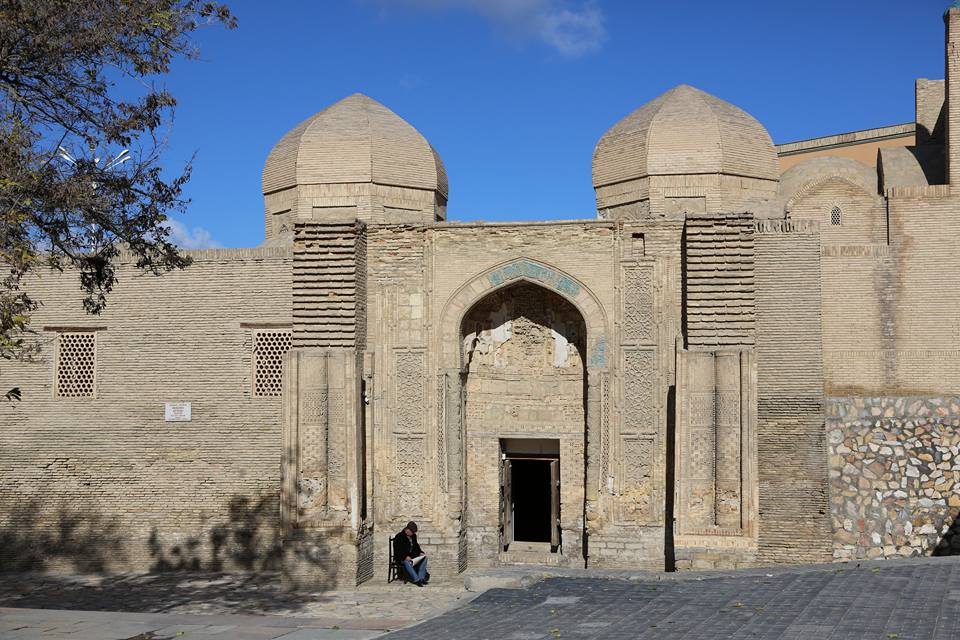
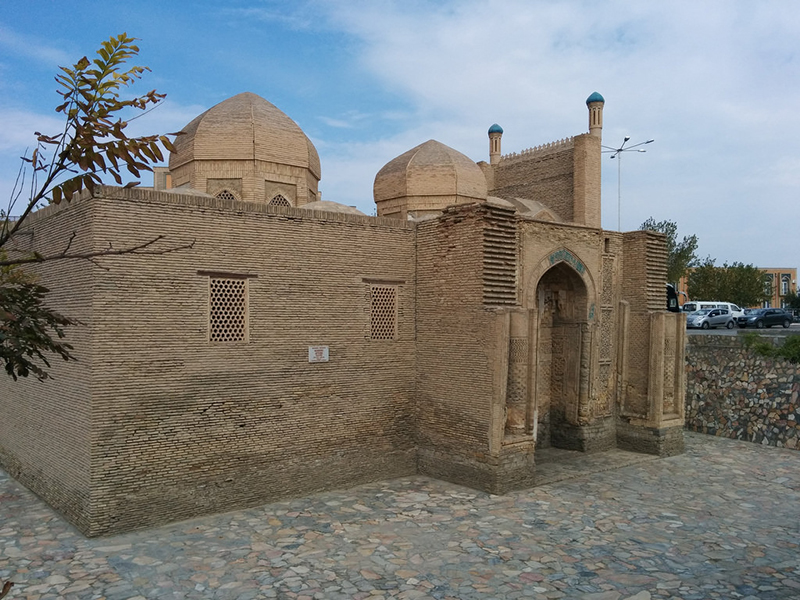
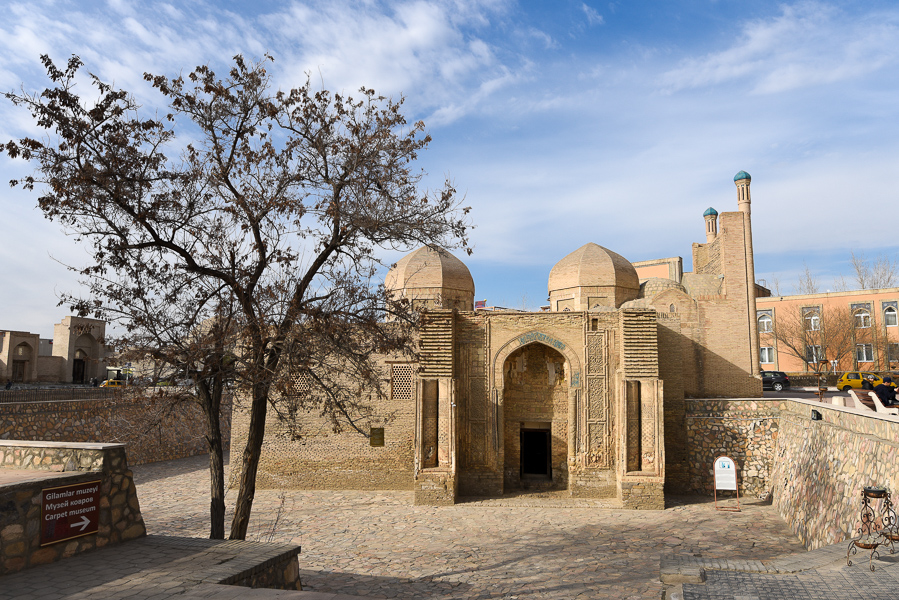
One of Bukhara’s oldest surviving mosques, the Magok-i-Attari Mosque dates back to the 9th–10th centuries, built atop a former Zoroastrian temple. It served as a place of worship for fire-worshippers before Islam’s arrival. The mosque was repeatedly reconstructed, with its current form reflecting 12th-century Karakhanid and 16th-century Timurid renovations. Buried over time, it was excavated in the 1930s, revealing its ancient foundations. Historically, it stood in a bustling bazaar area, where spices and medicines (attar) were traded, giving it its name. Today, it houses a carpet museum, preserving both Islamic and pre-Islamic heritage.
Structural Insights
The mosque showcases a blend of architectural styles, with a deeply recessed portal and intricate brickwork. Its southern façade features 12th-century carved terracotta patterns, while the northern side has 16th-century blue-tiled mosaics. The mosque’s sunken floor indicates its ancient origins, as centuries of urban buildup raised ground levels. The interior has a simple prayer hall with arched niches (mihrabs) and sturdy columns. The brick dome, though partially restored, demonstrates early Islamic engineering. The mosque’s asymmetrical layout reflects its multiple reconstructions, making it a unique archaeological palimpsest of Bukhara’s evolving architectural traditions.
Fun Fact
Magok-i-Attari Mosque is one of a few places where both Bukharian Jews and Muslims prayed after the arrival of Islam.