Lab-i Hauz Pond

Short Historical Overview
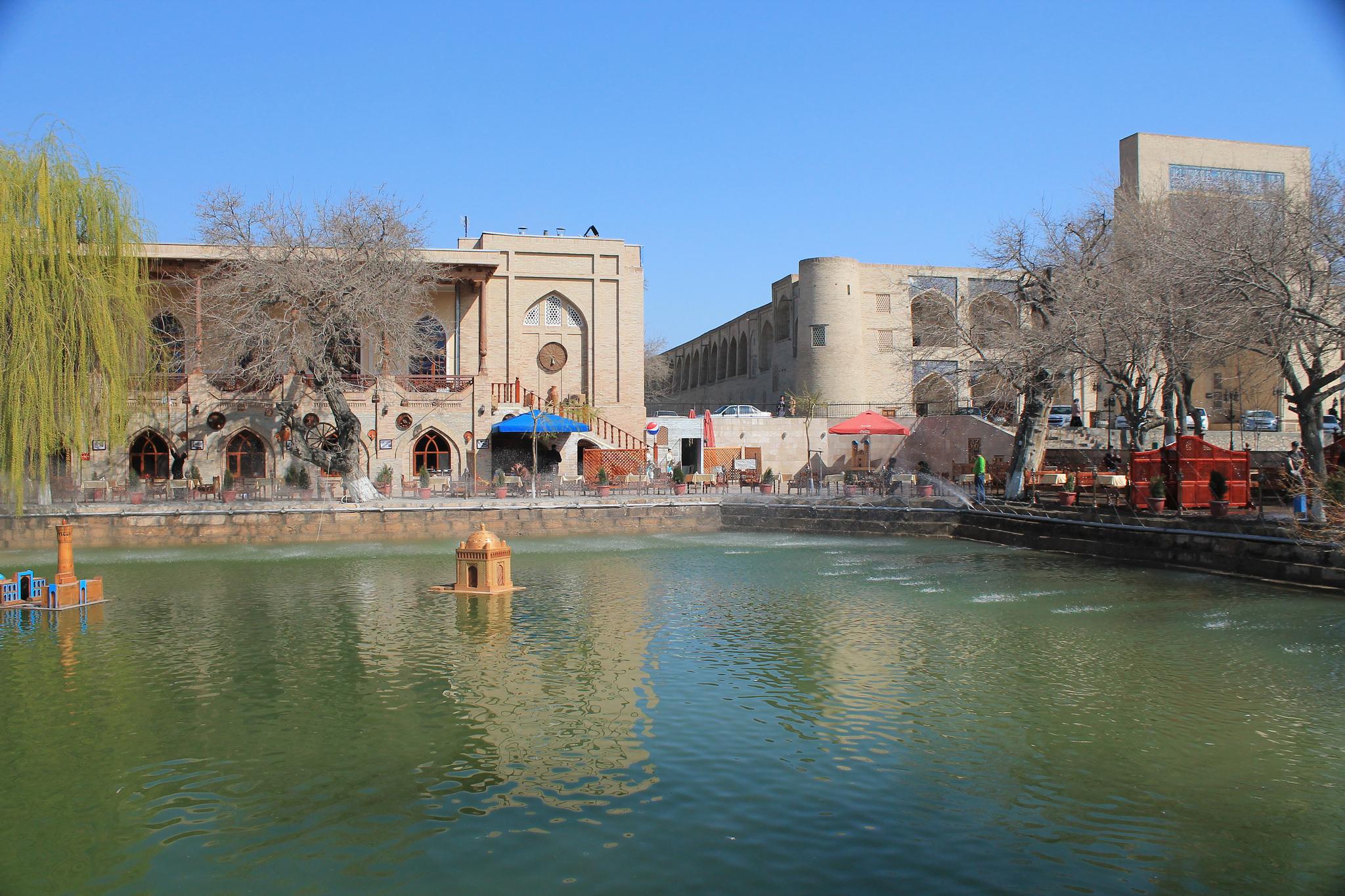
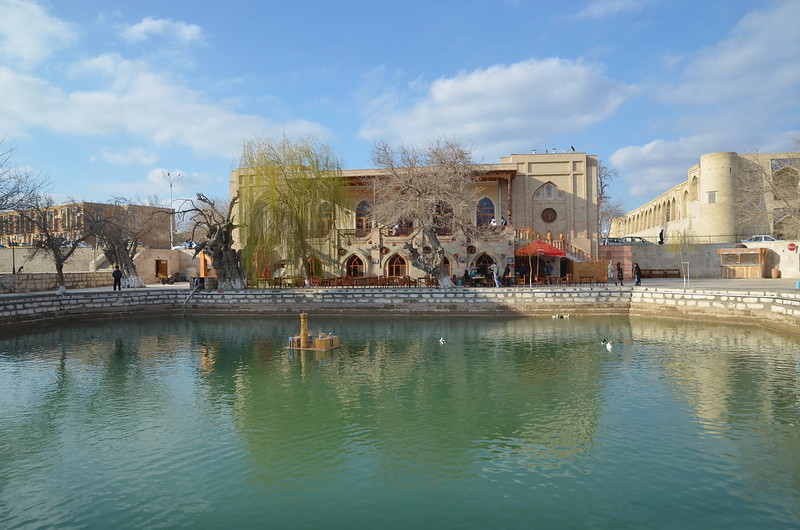
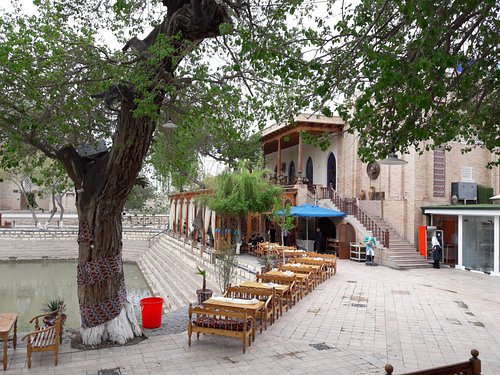
An artificial water reservoir located in the centre of an ensemble, Lab-i Huaz was constructed in 1620 by the Grand Vizier (Prime Minister of that time) of Bukhara Nadir Divanbegi. Water in the pond was of a crucial importance given the geographical location of the city, and, therefore, the pond was built with steps along its edges gradually going down to facilitate easier human access regardless of the water level.
Structural Insights
The water in the reservoir was stemming from the main water canal Shah Rud (Royal Canal). Being in the form of an octagon, the reservoir is 5 metres deep at its centre. Its steps are made of limestone which was later covered with lime plaster to improve water resistance.
Fun Fact
Legends say that the pond was constructed on the site of a Jewish widow’s house without her approval. A woman was desperate and cursed the pond, and there had been at least one case of drowning each year.
Tour Tips
Best seen at sunset when the brickwork glows golden. Nearby: Mir-i-Arab Madrasa, Toki Zargaron dome bazaar.