Kukeldash Madrasah

Short Historical Overview
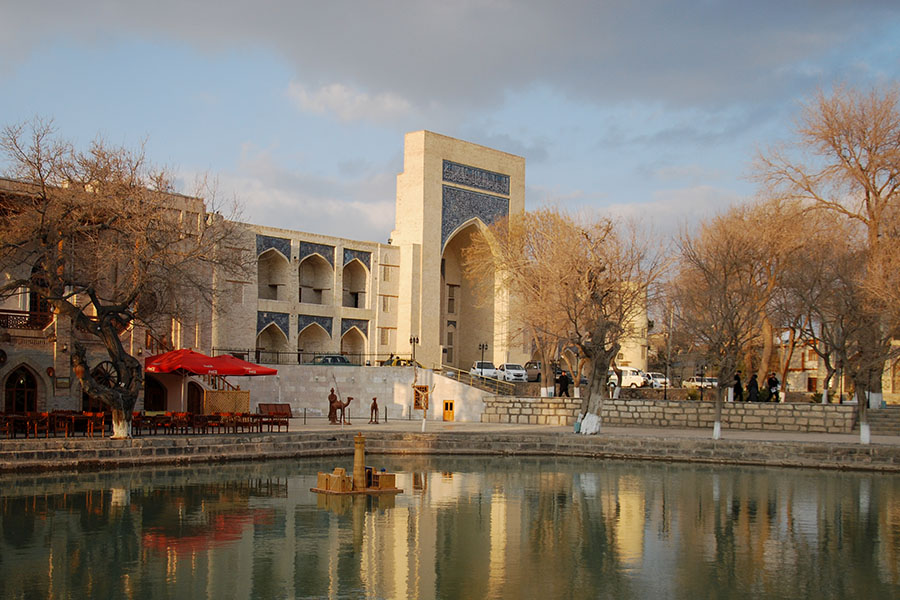
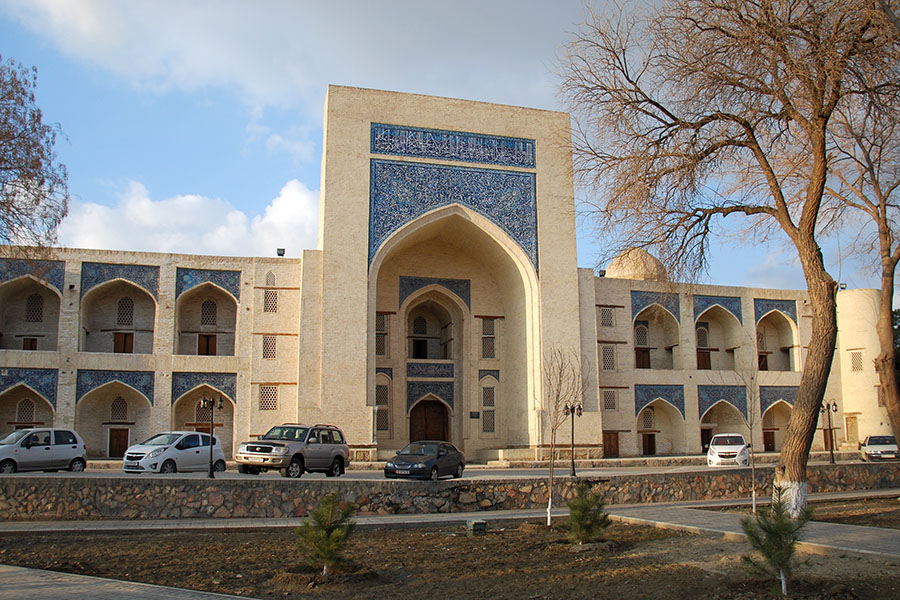
Equally funded by Abdulakhan 2 and his brother, a poet and a person profoundly involved in art, the madrasah Kukeldash was constructed in the period of prevalence of Bukhara in Mawarannahr – in 1533, to be more precise. Since its very construction, the edifice has mainly been used for educational purposes. After the Soviet invasion, though, its function shifted to representing Bukhara's legacy, and it mainly served as a museum.
Structural Insights
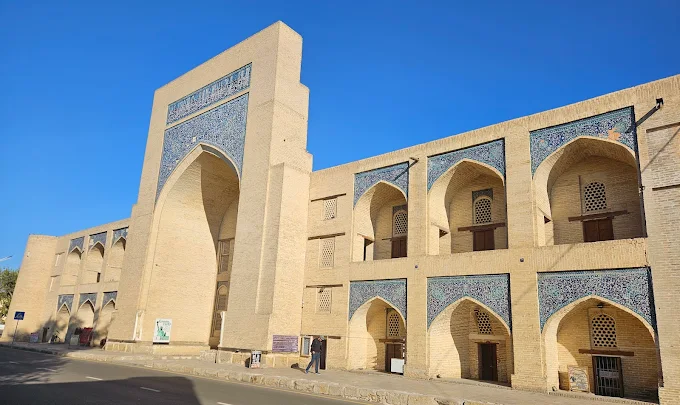
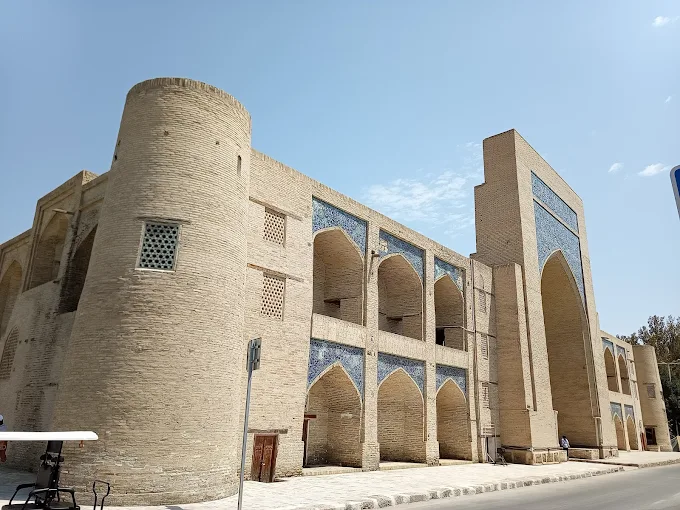
Kukeldash is a two-story building that includes 130 hujras (private cells) which used to house more than 320 students. As it is typical for medieval Oriental madrasahs, Kukeldash is rectangular in layout and features a grand entrance with a welcoming arch vividly designed with glazed mosaic. In the corners, the edifice was reinforced by minaret-like towers, yielding to its solidity.
Legends
Locals used to believe that a pistachio tree, taking its roots in one of the domes of madrasah, held mysterious features, protecting the madrasah.