Domulla Hasan Madrasa

Short Historical Overview
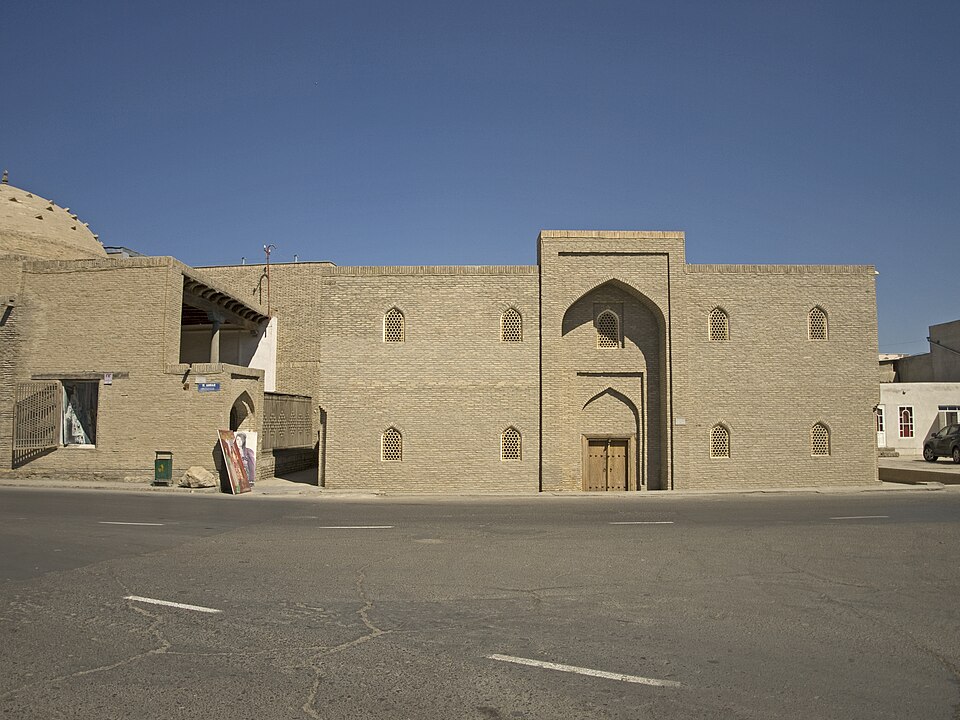
Built in the late 16th century, the Domulla Hasan Madrasa is linked to a prominent Islamic jurist. It served as a school for theology and law during the Shaybanid dynasty’s rule. Unlike grander madrasas, it emphasized intimate study circles, fostering deep scholarly debates. Over time, it became a hub for local judges (qazis) training. The madrasa weathered political changes, including Bukhara’s annexation by Russia, but fell into decline in the early 20th century. Recent restorations have revived its architectural beauty, though it no longer functions as a school, standing instead as a quiet testament to Bukhara’s scholarly past.
Structural Insights
The madrasa’s design is compact, with a single-story layout around a small courtyard. Its brick façade includes a recessed entrance with minimal tilework, focusing on geometric brick patterns. The hujras (cells) feature arched doorways and small windows for natural light. The prayer hall has a simple mihrab with stucco carvings. The madrasa’s modest scale reflects its role as a neighborhood school rather than a monumental institution. Restoration efforts have preserved its original brickwork and reinforced the wooden ceiling beams. Its understated elegance exemplifies the functional yet beautiful architecture of late medieval Bukhara.
Fun Fact
After the Soviet era, the madrasa was repurposed, and in the 2010s was restored as a cultural and tourist facility, with ground-floor rooms used as shops.