Bolo-Hauz Mosque

Short Historical Overview
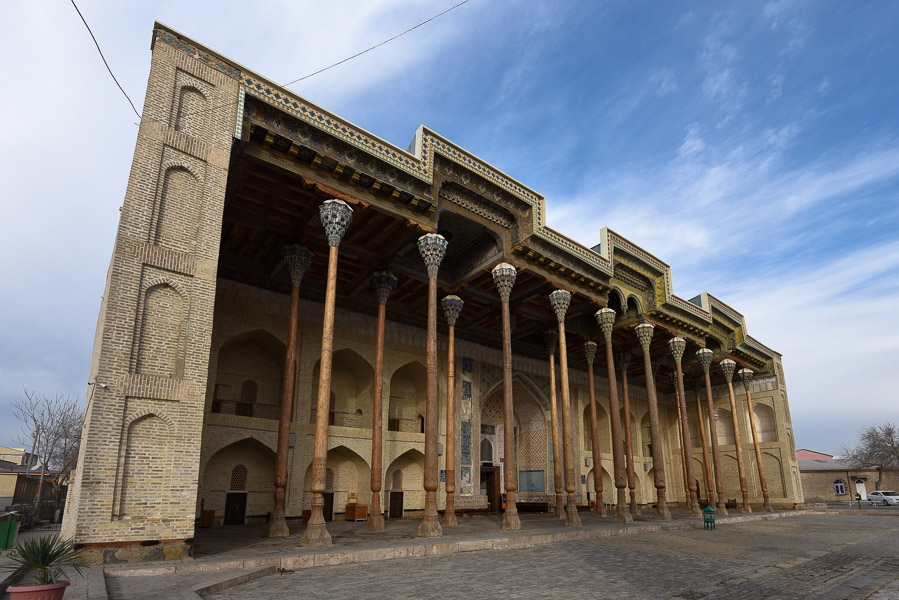
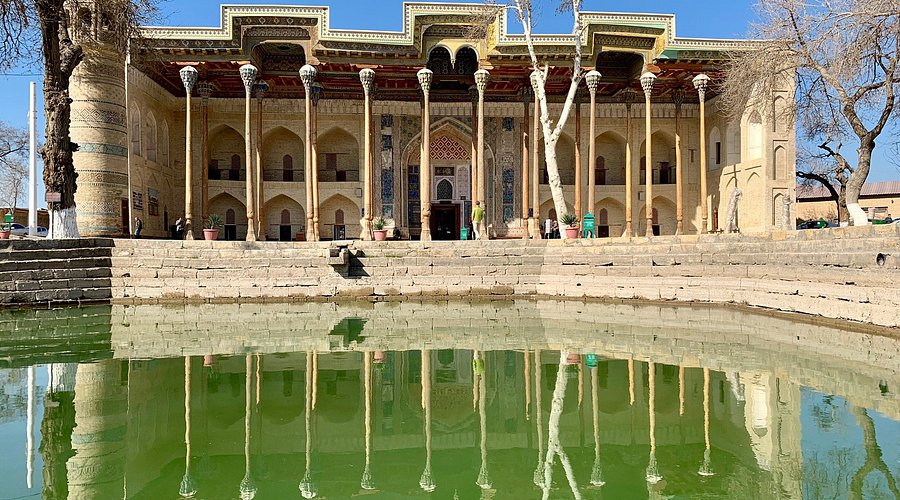
The Bolo-Hauz Mosque was built in 1712 during the rule of Emir Abu’l-Fayz Khan. Located across from the Ark Fortress, it was originally intended as a public prayer place but soon became the Emir’s own Friday mosque. Bolo-Hauz, Children’s Pool in translation, refers to the pond in front of the mosque. Though not the oldest in Bukhara, it became an important symbol of the religious period, especially in the early 20th century.
Structural Insights
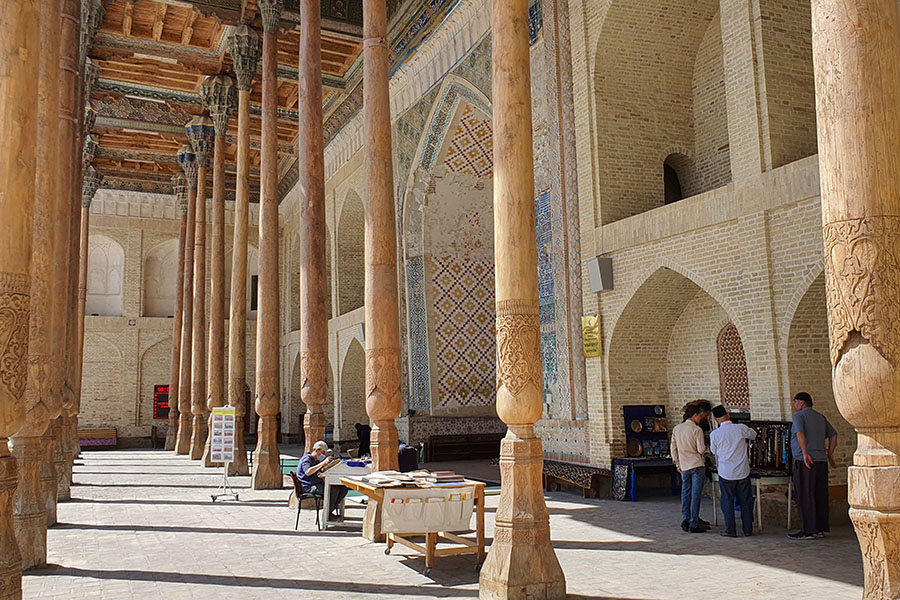
The most striking feature of Bolo-Hauz Mosque is its tall wooden columns supporting a richly painted roof. The ceiling above the entrance is decorated with bright geometric patterns, blending strength with artistry. The thickness of the walls of the mosque stabilizes temperature inside, while the iwan improves the airflow.
Fun Fact
Bukhara was facing a severe drought, and the Bolo-Hauz complex was built with the intention of providing a water source for the people, making it a place for people to perform ablutions before prayer. The reservoir, or "Khauz," was meant to be a practical solution to the water shortage. The combination of the water and the mosque was seen as a way to bring blessings to the city.